
How to Choose a Photographer: Essential Tips
Learn how to choose a photographer for your wedding, family, couple or personal photo session. 7 key criteria to help you make the right dec...
Read more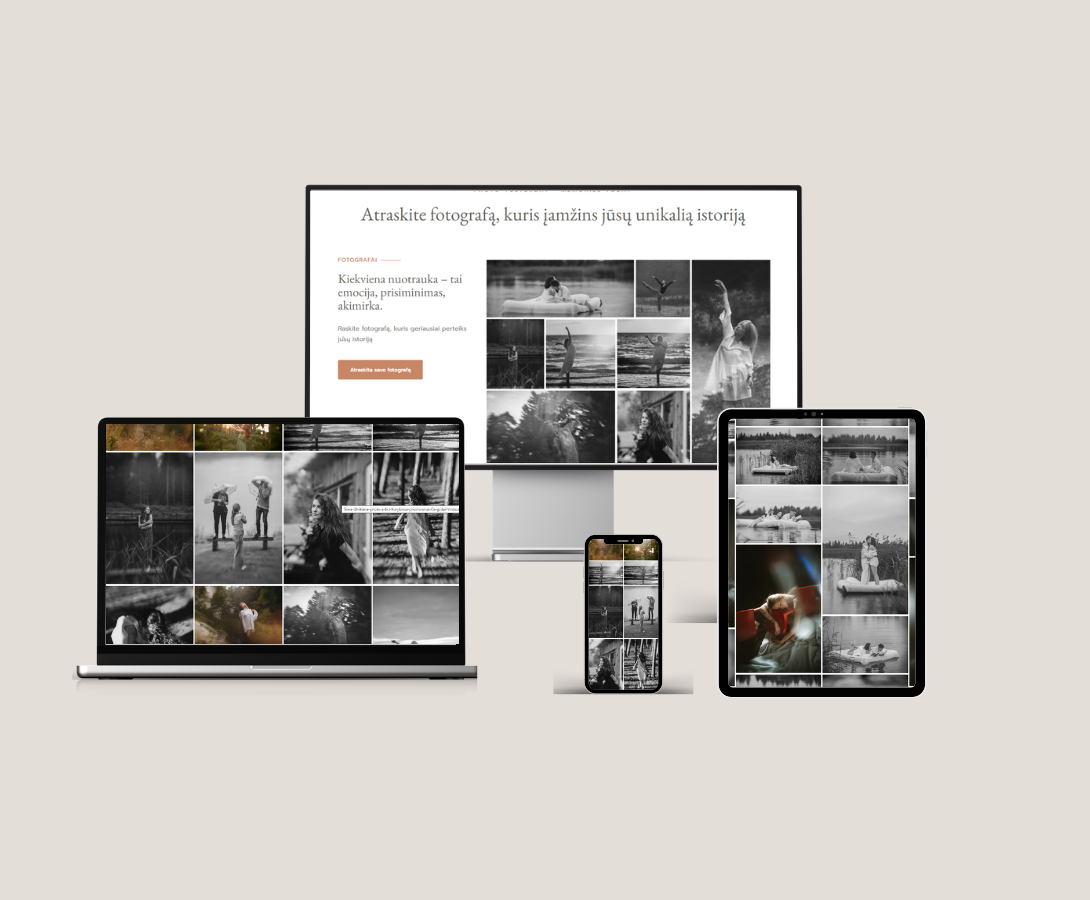
Photo Yesterday · For photographers
Where should photographers host their portfolio, and why isn't Instagram alone enough?You upload your best work to Instagram, collect a few hundred likes, and a week later almost nobody sees those photos anymore. A month later, even you struggle to find them on your own profile.
If that sounds familiar, you're not alone. Sooner or later, most photographers realise that social media is great for sharing moments, but it isn't the most convenient place to present your work clearly and neatly over the long term.
In this article we look at why Instagram alone isn't enough for a photographer, how a portfolio differs from a social media profile, and how to present your work professionally so that future clients can find you more easily.
Instagram is built to keep people in the app for as long as possible, not to help the right client – the one looking for a wedding photographer, a family photo session or a personal portrait – find your work easily.
That's an important difference.
Here are the main reasons why a social media profile alone isn't enough:
Instagram is a great tool for staying visible, showing your latest work and engaging with your audience. But it's designed more for grabbing attention than for presenting a photographer's work in depth.
That's why it's worth treating it as one part of your overall communication, not as the only place to show your work.
A portfolio and a social media profile serve different purposes, even though at first glance both simply show photos.
Social media is an ongoing, live conversation. It's where you share everyday life, your latest work, behind-the-scenes moments from shoots, available dates or personal stories. It helps you build a connection with your audience and stay top of mind.
A portfolio is a carefully considered, professional presentation. It's where you send a client once they are seriously considering working with you. What matters here isn't the number of photos, but a selection of your best work, clearly organised by style, service or type of photo session.
The difference can be summed up like this: social media answers the question "is this photographer active?", while a portfolio helps answer the question "do I want this particular person to photograph a moment that matters to me?".
It's that second question that often decides the client's final choice.
A well-organised portfolio builds trust. The client sees not a random stream of content, but work presented with purpose and professionalism. This helps them understand the photographer's style even before the first conversation.
One of the most common mistakes is showing all your work only on social media, where content depends on an ever-changing feed and algorithms.
When all your work lives only on Instagram or Facebook, you become dependent on the platform's rules and algorithms. An algorithm change can reduce your reach, and if you temporarily lose access to your account, it becomes harder to show clients the work you've built up over many years.
A separate portfolio gives you a clearer and more stable place to present your selected work. Its content doesn't disappear in the daily social media feed, and you can give a client one clear link to your most important work and information.
Social media keeps changing, so the smartest strategy is to use it to attract attention while also having a separate place where your work is presented consistently, clearly and professionally.
You don't necessarily need a separate website – you need a place that performs a website's most important functions.
Having your own website has its advantages. It gives you more freedom over design and structure and lets you use your own domain. But it also comes at a real cost: the website has to be built, maintained and updated, you pay for the domain and hosting, take care of security and sometimes deal with technical problems.
For most photographers, this takes time and energy they would rather spend on shooting, clients and editing photos.
That's why some photographers choose another route – a professional portfolio platform where their work is presented neatly and reliably, without having to manage an entire website themselves.
This way, the photographer gets a space designed for professional presentation, without most of the technical hassle of a website, plus an extra chance of being discovered online.
In other words, the key question isn't "a website or Instagram?". What matters more is whether you have a tidy, reliable place where your work is presented professionally and that's easy to share with a client.
Many clients start looking for a photographer on Google. They type in phrases like "wedding photographer in Kaunas", "family photo session in Vilnius", "christening photographer in Klaipėda" or "personal photo session".
This is where one of social media's weaknesses becomes clear. An Instagram profile doesn't always appear among the top results for such searches.
A well-organised portfolio that clearly states the names of your services, your city and your area of photography, and includes written descriptions, can help search engines better understand what the photographer offers.
A few things help make a portfolio easier to find:
When your portfolio is hosted on a platform optimised for search engines, the platform takes care of part of the technical work. Still, it's important to understand that simply creating a profile doesn't guarantee high rankings on Google.
Visibility usually grows gradually as the profile is filled with quality content, clear descriptions and regularly updated work.
Photo Yesterday was created so that photographers don't have to choose between convenience and a professional presentation of their work.
The platform gives you a place to clearly present your photography style, services and best work, without having to handle all the technical upkeep of a website.
What does this give a photographer?
Photo Yesterday becomes an additional place where your work can be presented consistently and where clients can easily explore it.
Portfolio hosting on Photo Yesterday is designed so that photographers have more time for creative work, while Photo Yesterday takes care of building the portfolio and its technical presentation.
The principle is simple: you provide your selected work and the key information about yourself, your services and your city, and Photo Yesterday takes care of creating the portfolio and presenting it professionally. You can add the finished link to your Instagram bio, send it to clients, use it in ads or include it with your contact details.
The main benefits:
This way, social media and your portfolio start working together: Instagram attracts attention, and Photo Yesterday helps an interested person get to know your work in more depth and make a decision.
Yes, and it's actually recommended. Instagram is great for attracting attention, showing your latest work and keeping in touch with your audience. Your portfolio is where you send people who are already interested. The two channels complement each other.
Yes. Even if you're just starting out, a tidy portfolio helps you build a professional image from the very beginning and clearly show your chosen area of photography. What matters most isn't having lots of photos, but selecting the work that best reflects your style.
No. The photographer provides selected photos and information about themselves, and Photo Yesterday takes care of building the portfolio, its design and technical presentation. If you need to update your work or information, changes are made by contacting Photo Yesterday.
Your own website gives you more individual control and design freedom, but it requires more maintenance, technical knowledge and investment. Photo Yesterday provides the space a professional portfolio needs without most of the technical hassle of a website. It can be a convenient solution for photographers whose priority is presenting their work and services clearly.
Instagram is a great tool for attracting attention, but it isn't the most convenient place for a long-term, structured presentation of a photographer's work.
A portfolio helps build trust, clearly shows your style, presents your services and gives you an additional chance of being discovered online.
The best results come when social media and your portfolio work together: one helps spark interest, and the other presents your work in more depth and helps the client make a decision.
Send us your work and information, and Photo Yesterday will take care of creating your professional portfolio.
Order a portfolio © Photo Yesterday · Portfolio platform for photographersKeep reading

Learn how to choose a photographer for your wedding, family, couple or personal photo session. 7 key criteria to help you make the right dec...
Read more
Wondering whether a photo studio is right for your session? Find out when a studio works best for family, maternity, business, personal or h...
Read more
When should you book a wedding, family, christening or newborn photographer? A detailed guide to booking timelines by type of photo session.
Read more